
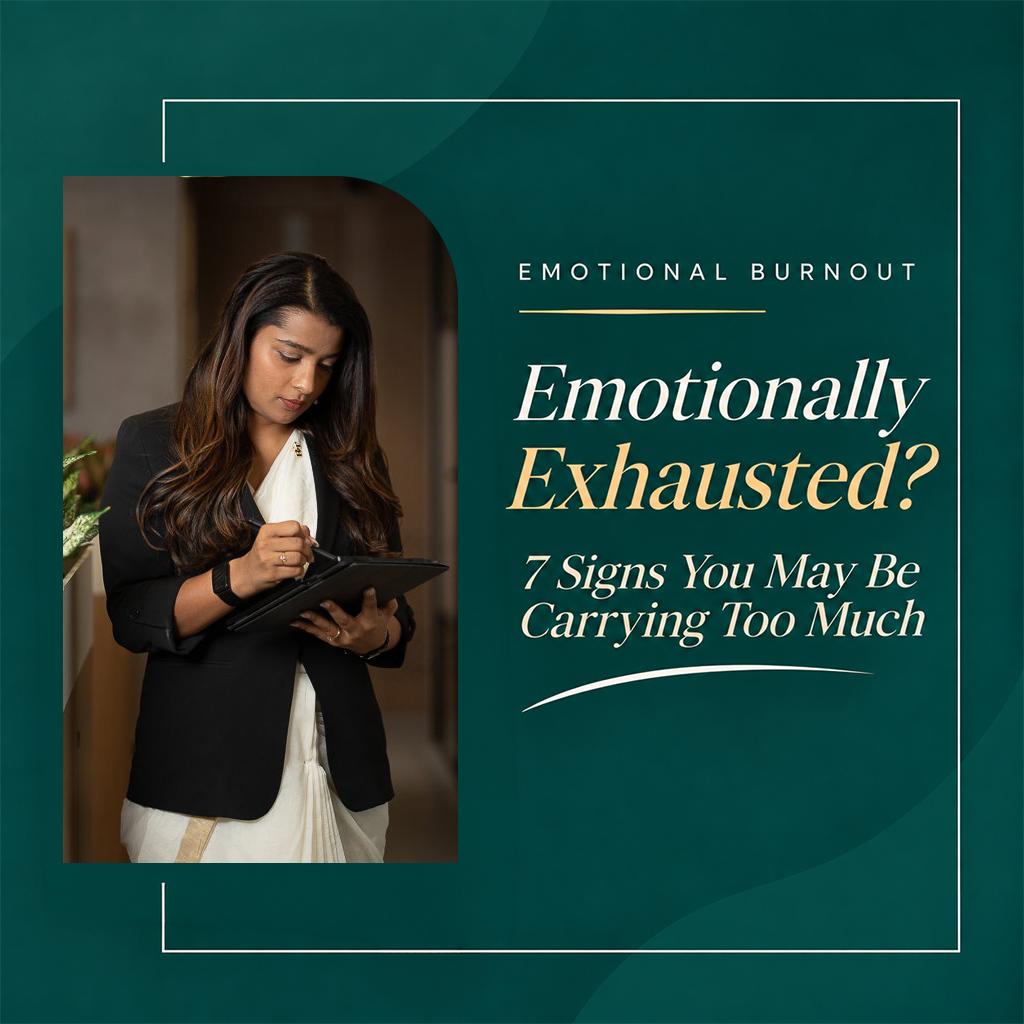
People-Pleasing: Why Saying No Can Feel So Difficult
Have you ever agreed to something while every part of you wanted to say no?
Have you ever agreed to something while every part of you wanted to say no? You say yes to another request when your calendar is already full. You take responsibility for something that was never really yours. You change your plans because someone might be disappointed. You stay quiet during a conversation because speaking honestly feels like it could create conflict.
Then, later, you wonder why you feel irritated, exhausted or emotionally drained. This is one of the uncomfortable contradictions of people-pleasing: you may be trying to keep everyone else comfortable while quietly becoming uncomfortable with yourself.
People-pleasing is not simply being kind. Kindness is a choice. People-pleasing can feel more like a compulsion driven by fear, guilt, approval-seeking or the belief that your needs should come after everyone else’s. The difference matters because caring about people and abandoning yourself to keep them happy are not the same thing. If saying no makes you feel guilty, if disappointing someone feels unbearable, or if you often need other people’s approval before trusting your own decisions, it may be worth looking at what is happening underneath that behaviour.
What Is People-Pleasing?
People-pleasing is a pattern of consistently prioritising other people’s wants, expectations or emotional comfort, often at the expense of your own needs and boundaries.
A people pleaser may automatically say yes, apologise excessively, avoid disagreement, over-explain decisions or constantly check whether everyone is happy with them. They may be highly considerate and dependable, but the behaviour can become exhausting when it is driven by fear rather than genuine choice.
Being helpful is not the problem. Being generous is not the problem. Caring about someone’s feelings is not the problem either. The problem begins when your internal rule becomes something like: “If I disappoint someone, I have done something wrong,” or “If someone is unhappy with me, I must fix it.”
When approval becomes the price of feeling safe, saying no can suddenly feel much bigger than two simple letters.
Why Does Saying No Feel So Difficult?
For many people, saying no is not difficult because they do not know how to form the word. It is difficult because of what they imagine will happen after they say it.
- What if they get angry?
- What if they think I am selfish?
- What if they stop liking me?
- What if I lose the relationship?
- What if they think I am not supportive?
- What if I disappoint them?
The mind can turn a simple boundary into a full emotional emergency. At the center of this may be a fear of rejection or conflict. You may have learned, consciously or unconsciously, that being agreeable keeps relationships smooth. Perhaps praise came when you were helpful. Perhaps disagreement was uncomfortable. Perhaps you became the person who handled things, kept the peace, or took care of everyone else.
Over time, you may have become very good at reading other people’s needs while becoming less familiar with your own.
People-Pleasing and the Need for Validation
Everyone wants to feel accepted. Wanting appreciation, connection, and belonging is completely human. The issue is not wanting validation. The issue is when external validation becomes the main source of your sense of worth.
If you need someone to agree with your choice before you feel confident about it, or if one person’s disappointment can make you question your entire decision, you may be giving their reaction more authority than your own values.
Imagine you decline an invitation because you genuinely need rest. The other person sounds disappointed.
The second response is not automatically wrong. Sometimes changing your plans is a perfectly reasonable choice. The important question is: did you choose it freely, or did guilt decide for you?
The Hidden Cost of Always Being the Nice One
People-pleasing can look positive from the outside. You are helpful. You are available. You rarely create conflict. People know they can rely on you. But constantly overriding yourself has a cost.
You may become emotionally exhausted because you keep giving when you do not have the capacity to give. You may feel resentment because other people seem to receive your time and energy without realising what it costs you. You may lose touch with your preferences because you are always asking what everyone else wants.
Sometimes resentment is not a sign that you are a bad person. It is information. It may be telling you that you have been saying yes when you actually needed to say no.
This is why emotional awareness matters. Before changing the behaviour, notice the feeling underneath it.
Are You a People Pleaser? Look for These Patterns
You may recognise yourself in people-pleasing patterns if you regularly say yes when you want to say no, feel guilty for having needs, apologise even when you have done nothing wrong, avoid difficult conversations, over-explain your choices, worry excessively about how others perceive you, change your opinion to avoid conflict, or feel responsible for other people’s emotions.
Another common pattern is difficulty receiving disappointment from others. Someone can be unhappy with your decision without you having done something wrong. Someone can disagree with you without the relationship being in danger. Someone can want something from you that you are not able or willing to give.
Learning this distinction can be uncomfortable because people-pleasing often comes with a strong desire to keep relationships peaceful.
But peace that requires you to constantly silence yourself is not the same as healthy connection.
How People-Pleasing Can Affect Relationships
Healthy relationships need honesty, reciprocity and room for different needs. If one person constantly accommodates while the other constantly receives, the relationship can gradually become unbalanced.
People-pleasing can also make it harder for others to know what you genuinely want. If you always say “whatever works for you,” people may assume you are genuinely comfortable with every option. Meanwhile, you may be quietly building frustration.
Clear communication gives relationships a better chance of becoming honest. When you express a preference, a boundary or a disagreement respectfully, you give the other person real information about you. That can feel risky at first. But a relationship in which you can only be loved when you are endlessly agreeable is not giving you much room to be fully yourself.
How to Stop People-Pleasing
Stopping people-pleasing does not mean becoming cold, selfish or inconsiderate. It means learning to make choices based on a combination of your needs, values, responsibilities and genuine care for others, rather than fear alone.
The first step is to slow down before automatically saying yes. If someone asks you for something, you do not have to answer immediately. Try: “Let me check and get back to you.” That small pause gives you time to ask yourself whether you actually have the capacity and willingness to say yes.
Then ask three questions:
- Do I want to do this?
- Do I have the capacity to do this?
- Am I saying yes because I genuinely choose to, or because I am afraid of their reaction?
You may be surprised by how often the third question changes the answer.
How to Say No Without Over-Explaining
One reason saying no feels difficult is that we think we need to build a legal case for our decision. Sometimes a simple no is enough.
You can say:
- “I won’t be able to take this on right now.”
- “Thank you for asking, but I won’t be able to make it.”
- “That does not work for me.”
You do not need to provide a five-minute explanation every time you protect your time. Over-explaining can sometimes be an attempt to convince the other person that your boundary is legitimate.
A boundary does not become more valid because someone else approves of it.
What If Someone Is Disappointed?
This may be the hardest lesson for a recovering people pleaser: someone else’s disappointment is not automatically your responsibility to remove.
People are allowed to have feelings about your choices. They may be disappointed. They may disagree. They may even wish you had said yes. You can care about that without changing your decision.
Try separating empathy from responsibility. “You’re disappointed, and I understand that” is very different from “You’re disappointed, therefore I must fix this.” Healthy emotional boundaries allow both people to have feelings without one person becoming responsible for regulating the other person’s emotional experience.
Boundaries Are Not Rejection
Many people avoid boundaries because they fear that saying no means rejecting the person. But a boundary is usually about what you will or will not do, not about the worth of the other person.
- “You are important to me, and I cannot do this today.”
- “I care about the relationship, and I am not comfortable discussing this right now.”
- “I understand your perspective, but I see this differently.”
These statements create space for both connection and individuality.
Riddhi’s current work places emphasis on emotional awareness, acceptance, internal resistance and healthier relationships. Her coaching approach describes helping people recognise emotional patterns and respond with greater clarity rather than reacting automatically.
The Difference Between Kindness and Self-Abandonment
The outside behaviour may look identical. The internal experience is completely different. This is why the goal is not to stop being kind.
The goal is to make kindness a choice instead of a survival strategy.
Start With Small No’s
If you have spent years saying yes automatically, do not expect yourself to become comfortable with every boundary overnight.
Start small. Say no to a low-stakes request when you genuinely do not want to participate. Express a preference when you normally say “anything is fine.” Take time before answering. Let someone solve a problem that is genuinely theirs. Stop apologizing for ordinary needs.
Then notice what happens. Often, the fear before the boundary is much larger than the actual consequence. And even when someone reacts negatively, you may discover that you can survive their disappointment without abandoning yourself.
That is how self-trust grows. Not through one dramatic transformation, but through repeated experiences of listening to yourself and discovering that you can handle the discomfort that follows.
Acceptance: Making Room for Your Own Needs
At the heart of people-pleasing is often a difficult relationship with your own needs. You may believe other people’s needs are more urgent, more important or more deserving of attention.
Acceptance can begin to change that relationship.
Your needs do not have to compete with someone else’s to be legitimate. You can care about another person and still need rest. You can love your family and still need personal space. You can support a colleague and still have limits. You can value a relationship and still disagree.
Riddhi’s work around acceptance focuses on becoming more aware of emotional patterns, building self-worth and creating healthier relationships. Her self-acceptance work also addresses the tendency to seek external validation and encourages a relationship with yourself grounded in trust and compassion. The goal is not to become someone who never helps anyone. It is to become someone who can choose when to help without disappearing from their own life.
When People-Pleasing Becomes Emotionally Exhausting
If constantly managing other people’s reactions is leaving you anxious, resentful, exhausted or disconnected from yourself, it may be useful to explore the pattern more deeply.
Consider speaking with a qualified mental-health professional if people-pleasing is connected to significant anxiety, depression, trauma, persistent distress or serious problems in your relationships or daily functioning. Coaching and personal-development work can support self-awareness and behaviour change, but it should not replace mental-health assessment or treatment when that is needed.
You Are Allowed to Disappoint Someone
One of the biggest shifts in moving away from people-pleasing is realising that being a good person does not require universal approval.
Someone can be disappointed in you and you can still be a caring person. Someone can disagree with you and you can still trust your decision. Someone can say no to you and the relationship can survive. You can say no to someone else and allow the same possibility.
You do not have to earn love by being endlessly available. You do not have to prove your worth by solving everyone’s problems. And you do not have to make yourself smaller so that everyone around you can remain comfortable.
Sometimes, the most honest sentence you can say is simply: “I cannot do that right now.”
And perhaps the deeper work is not learning how to say no perfectly. It is learning that your yes means more when your no is also allowed to exist.
Healthy relationships are not built on constant agreement. They are built on honesty, respect, boundaries, communication and the freedom to be a whole person inside the relationship.
If you often find yourself saying yes when you want to say no, feeling guilty for having needs, or seeking approval before trusting your own decisions, it may be time to look at the emotional pattern underneath. Riddhi’s work focuses on emotional awareness, acceptance, self-worth and healthier relationships, helping you understand what is happening within you so you can respond with greater clarity.
Explore Riddhi’s work








Comments