
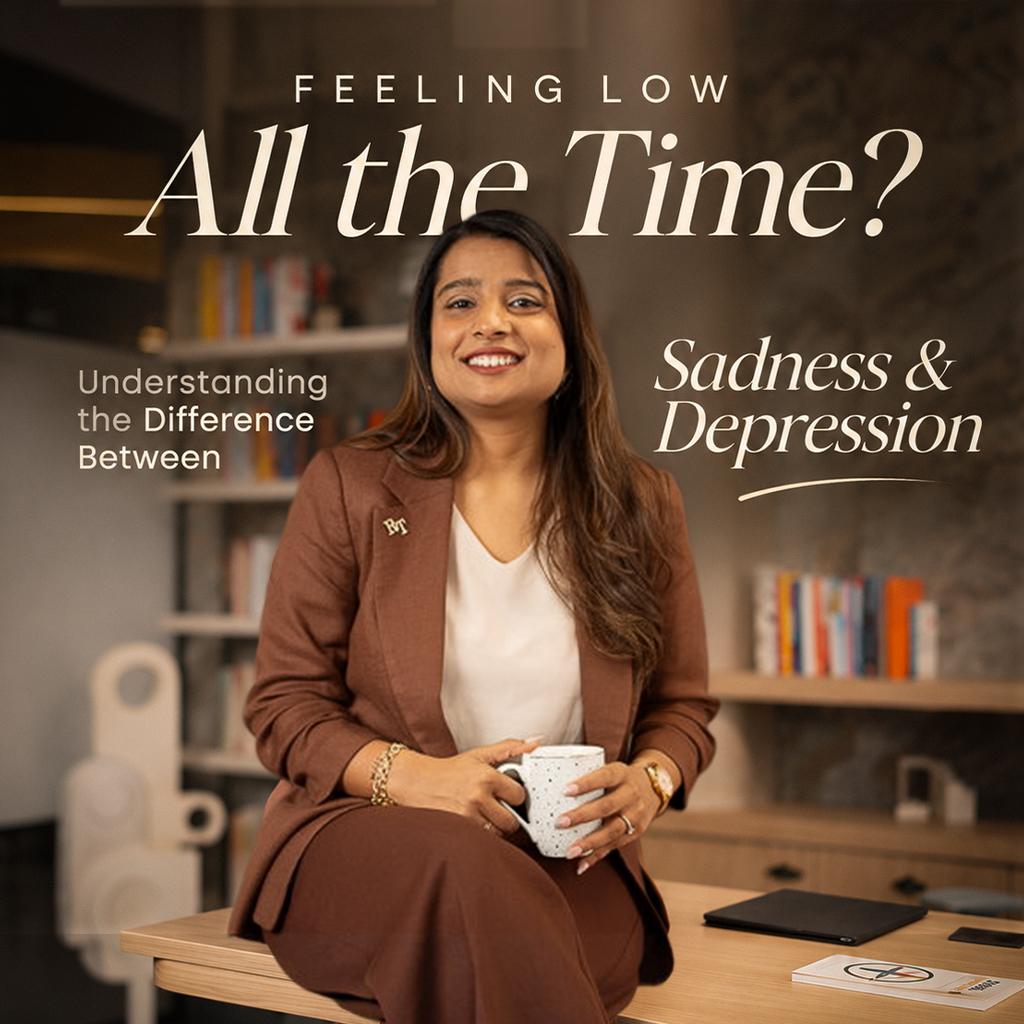
Feeling Low All the Time? Understanding the Difference Between Sadness and Depression
Everyone has days when they feel low. But what happens when the feeling does not seem to leave?
Everyone has days when they feel low. A difficult conversation, a disappointing result, a relationship problem, a stressful week, or simply an exhausting season of life can affect your mood. You may want to withdraw, cry, sleep more, or spend some time alone. Feeling sad is part of being human, and sadness does not automatically mean that something is wrong with you.
But what happens when the feeling does not seem to leave? When getting out of bed starts feeling difficult, things you once enjoyed no longer feel interesting, your motivation disappears and even small tasks seem overwhelming? When you find yourself feeling sad or emotionally numb for weeks and cannot quite explain why? This is where it becomes important to understand the difference between ordinary sadness and depression.
The two can feel similar, but they are not necessarily the same experience. Understanding the difference can help you recognise when you may simply need time, rest and support, and when it may be important to seek professional mental-health support.
What Is Sadness?
Sadness is a normal emotional response to difficult experiences. It can come after loss, disappointment, rejection, conflict, failure or change. Sometimes you know exactly why you feel sad. Other times, your mood may simply feel heavier than usual.
Sadness can be uncomfortable, but it can also move and change. You may have a difficult morning and feel better later. You may talk to someone, spend time with people you love, do something meaningful or simply give yourself time, and the intensity of the feeling may gradually reduce.
Most importantly, sadness does not necessarily take away your ability to experience positive emotions. You may still laugh at something, enjoy a meal, feel connected to a friend or look forward to something, even while going through a difficult period.
What Is Depression?
Depression is more than simply feeling sad. It is a mental-health condition that can affect mood, thinking, behaviour, sleep, energy, concentration, motivation and the ability to experience pleasure. According to the National Institute of Mental Health, symptoms of major depression can interfere with everyday functioning and persist for at least two weeks.
Depression can look different from one person to another. Some people feel deeply sad. Others describe feeling empty, numb, disconnected or unusually irritable. Some may continue working and meeting responsibilities while privately struggling with significant emotional pain.
This is why depression cannot always be identified simply by asking whether someone looks sad. A person can appear productive, social or cheerful and still be experiencing depression.
Sadness vs Depression: What Is the Difference?
One useful way to think about the difference is to look at the overall pattern rather than one isolated feeling. Sadness is often connected to a particular situation and may gradually ease. Depression can become more persistent and can affect multiple areas of life.
There is no single symptom that proves someone has depression. What matters is the combination, persistence and impact of symptoms, and only a qualified professional can make a diagnosis.
Common Depression Symptoms to Pay Attention To
If you have been feeling low, it can be useful to notice whether other changes have appeared alongside your mood. Common depression symptoms can include persistent sadness or emptiness, loss of interest or pleasure, changes in sleep or appetite, fatigue, difficulty concentrating, feelings of worthlessness or excessive guilt, and thoughts of death or suicide.
You do not need to experience every symptom. Depression can affect people differently, and the intensity can vary. If several of these changes have been present for two weeks or more and are affecting your daily life, consider talking with a qualified mental-health professional.
1You Feel Sad or Empty Most of the Time
Feeling low occasionally is normal. But if sadness, emptiness or a persistently low mood has become your emotional baseline, it deserves attention. You may wake up feeling heavy, move through the day without much enthusiasm and go to bed hoping tomorrow will somehow feel different.
2Things You Used to Enjoy Don’t Feel the Same
One of the important signs of depression is losing interest or pleasure in activities that once mattered to you. It may be a hobby, meeting friends, travelling, exercising, creating, cooking or simply spending time with people you care about. You may still do these things, but the emotional connection to them feels absent.
3Your Motivation Has Disappeared
Loss of motivation is often misunderstood as laziness. But depression can make even simple tasks feel disproportionately difficult. Replying to a message, getting dressed, completing routine work or leaving the house may require an effort that others cannot see. This is one reason it is important not to judge yourself harshly when your capacity has changed.
4You Feel Emotionally Exhausted
Depression can be mentally and physically draining. You may sleep but still feel tired. You may find yourself wanting to withdraw because interacting with people feels like work. Emotional exhaustion can also make decisions feel harder and reduce your ability to handle everyday stress.
5You Feel Hopeless About the Future
Sadness usually has an emotional connection to something that happened. Depression can affect the way you imagine what comes next. You may begin thinking that nothing will change, that things will always feel this way or that there is no point in trying. Persistent hopelessness is a sign that professional support may be important.
6You Become Highly Self-Critical
Depression can influence the way you interpret yourself. Mistakes may begin to feel like proof that you are a failure. You may blame yourself for things outside your control or believe that you are a burden to others. These thoughts can feel convincing while you are experiencing them, but a thought is not automatically a fact.
7Your Everyday Life Starts Changing
Perhaps the clearest question is: how much is this affecting your life? Are you struggling at work? Avoiding people? Finding it difficult to care for yourself? Sleeping much more or much less? Eating differently? Unable to concentrate? If your emotional state is consistently interfering with your relationships, responsibilities or daily functioning, it is worth taking seriously.
Feeling Low Does Not Mean You Have to Handle It Alone
There is a tendency to minimise emotional struggles. We tell ourselves that other people have it worse. We say that we should be grateful. We wait for a better week, a better month or a better version of ourselves.
But acknowledging that you are struggling is not weakness. It is awareness. You do not need to wait until everything falls apart before asking for support.
Talking to someone you trust can be a first step. If symptoms are persistent or interfering with your life, speaking with a psychologist, psychiatrist, doctor or another qualified mental-health professional can help you understand what you are experiencing and what support may be appropriate.
What Can You Do When You Feel Low?
Start by noticing rather than judging. Instead of immediately telling yourself, “I should be fine,” ask, “What has been happening with me lately?” Look at your sleep, energy, appetite, motivation, relationships and ability to enjoy things.
Give yourself basic support. Regular meals, movement, sleep routines, time outdoors, connection with supportive people, and manageable daily structure can be helpful parts of caring for your mental health. These steps are not a substitute for treatment when depression is present, but they can support overall wellbeing.
Most importantly, do not turn self-care into another performance test. You do not need to become perfectly positive or productive to deserve support. Sometimes the most useful step is simply admitting that you are not doing okay.
Acceptance Does Not Mean Ignoring What You Feel
Acceptance is sometimes misunderstood as saying, “This is fine, so I should just live with it.” That is not acceptance. Acceptance can simply mean being honest about what is happening instead of fighting the reality of your current emotional experience.
You can acknowledge, “I am feeling low,” without deciding that you will always feel this way. You can acknowledge that you are struggling without defining yourself by the struggle.
For someone who has spent years pushing emotions away, recognising what is happening internally can be an important first step towards seeking the right support. Emotional awareness can help you notice patterns, communicate your needs and make more informed choices about what you need next.
When to Seek Professional Help
If you have been experiencing persistent low mood, loss of interest, hopelessness, major changes in sleep or appetite, significant fatigue, difficulty concentrating or other concerning changes for two weeks or longer, consider reaching out to a qualified mental-health professional. Depression is treatable, and getting support is not a sign that you have failed.
If you are having thoughts of suicide, self-harm or feel that you may not be safe, seek immediate help from local emergency services or a crisis service, and reach out to someone you trust who can stay with you. This article is for education and is not a diagnosis or a substitute for professional care.
You Don’t Have to Explain Away Every Difficult Feeling
There will be days when you feel sad. There will be seasons when life feels heavier than usual. Not every difficult emotion is depression, and not every difficult emotion needs to be immediately fixed.
But if feeling low has become persistent, if you have stopped enjoying the things that once mattered, if motivation has disappeared or if hopelessness has started shaping the way you see your future, do not dismiss it as simply having a bad day.
Your emotional experience deserves attention. Your mental health deserves care. And asking for help does not make you weak.
Sometimes the first step is not finding the perfect answer. Sometimes it is simply being honest enough to say: “Something has changed, and I think I need support.”
If you have been feeling low, disconnected from yourself, or emotionally overwhelmed, taking a moment to understand what you are experiencing can be an important first step. Riddhi’s work around acceptance, emotional awareness, and personal transformation encourages individuals to develop a deeper relationship with their emotions and themselves.
Explore Riddhi’s work








Comments